


Last Updated on 2025-06-23 by Car Parts Expert
In the safety system of the car, the brake system is undoubtedly a crucial link. In many modern cars, especially those with hydraulic brake systems, the car brake vacuum pump plays an indispensable role. It is not only related to the sensitivity and reliability of the vehicle’s brakes, but also an important component to ensure driving safety. This article will explore in depth the working principle, function, common faults and maintenance of the car brake vacuum pump.
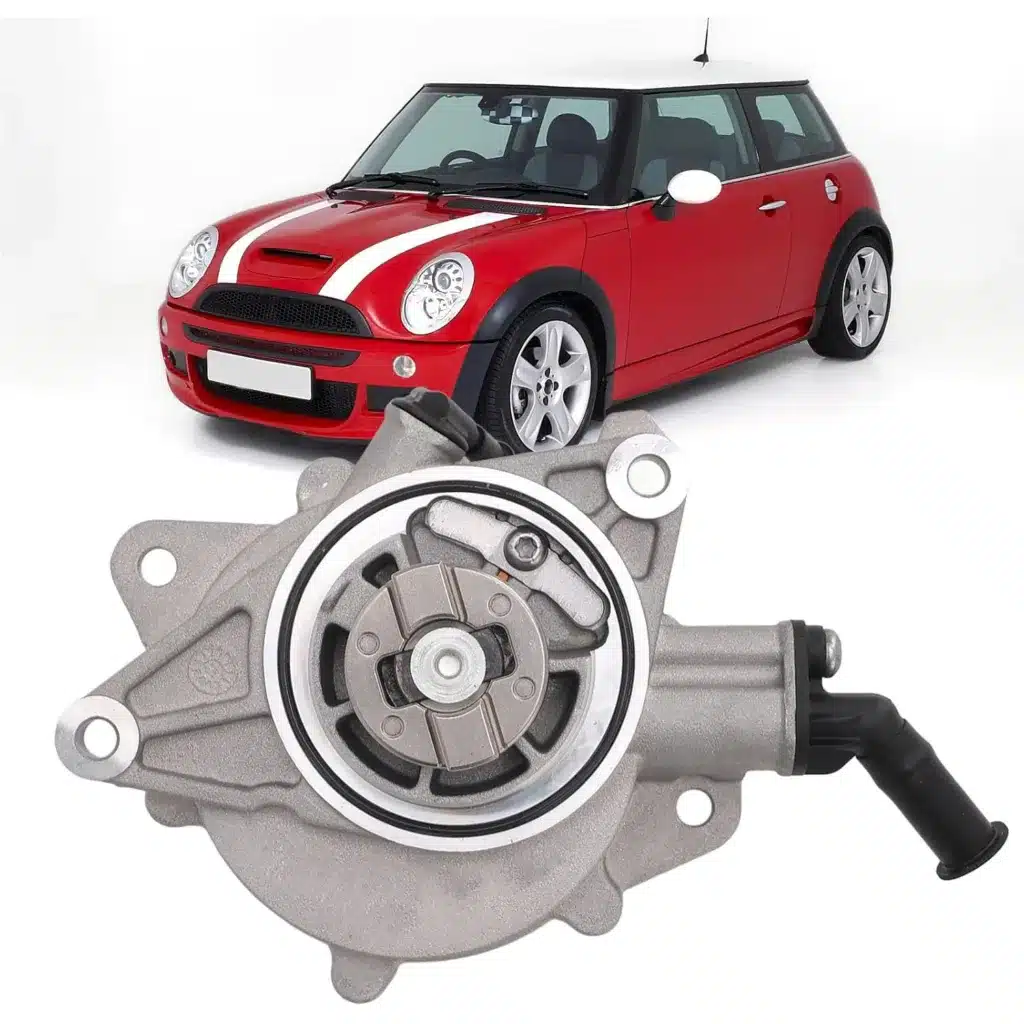
Car Brake vaccum pump Working principle
The car brake vacuum pump mainly works in vehicles equipped with power-assisted braking systems. These systems use the vacuum in the engine intake manifold to assist the driver in stepping on the brake pedal, thereby reducing the pedaling force and improving the response speed and effect of the brake. However, in some cases, such as when the engine is idling or the engine is stopped, the vacuum in the intake manifold is insufficient, and the brake vacuum pump is needed to provide an additional vacuum source.
The car brake vacuum pump is usually driven by an electric motor, and the air is extracted through the internal mechanical structure (such as a vane pump or a piston pump) to form a vacuum in the pump body. This vacuum is then transmitted to the brake booster to help push the booster piston, thereby amplifying the force of the driver’s stepping on the brake pedal.
car brake vacuum pump Function and Importance
The existence of the brake vacuum pump greatly improves the efficiency and safety of the brake system. In emergency braking situations, it can quickly provide sufficient vacuum assistance to ensure that the brake system can respond quickly and effectively to the driver’s operation. In addition, for some vehicles with electric power or electronic power brake systems, the brake vacuum pump is also an important part of its backup system to ensure that a certain braking capacity can be maintained in certain fault conditions.

Common faults and troubleshooting
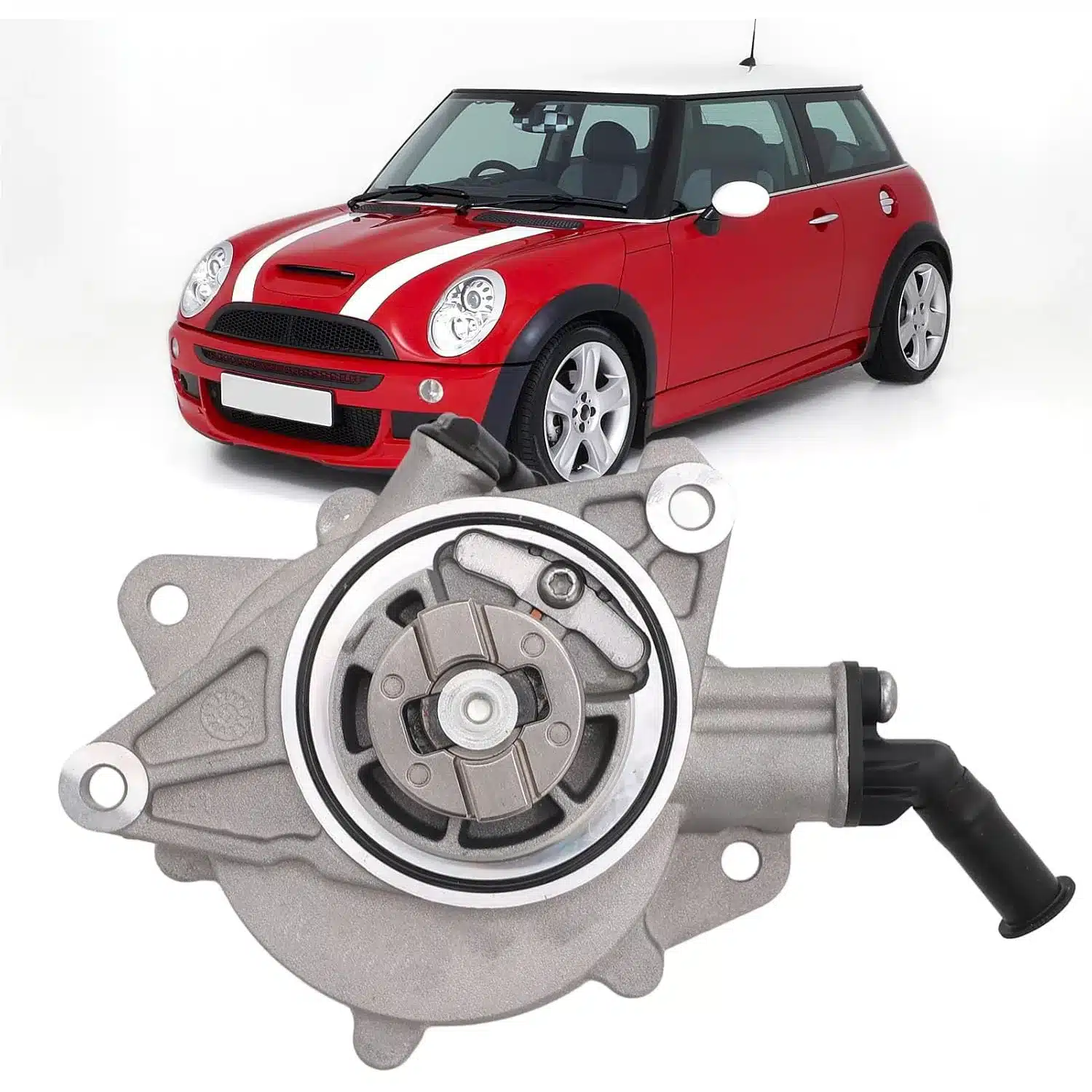
Although the brake vacuum pump has a relatively simple structure, it may also have some faults during long-term use. Common faults include air leakage due to poor sealing of the pump body, motor damage, blade or piston wear, etc. These faults often lead to insufficient vacuum or complete loss of vacuum assistance function, seriously affecting the performance and safety of the brake system.
For the troubleshooting and maintenance of the brake vacuum pump, professional technicians are usually required to operate. They will diagnose the problem by checking the sealing of the pump body, the working condition of the motor, and the wear of the internal mechanical parts. Once the faulty parts are found, they need to be replaced or repaired in time.
car Brake vaccum pump Maintenance
In order to ensure the long-term stable operation and extend the service life of the brake vacuum pump, car owners and maintenance personnel should perform maintenance work regularly. This includes checking the sealing of the brake vacuum pump, cleaning the dust and oil inside the pump body, checking the integrity of the motor and connecting lines, etc. In addition, for vehicles with electric power or electronic power brake systems, the functional status of the backup system should be checked regularly to ensure that it can work normally in an emergency.
car Brake Vaccum Pump is very important
In short, as an important part of the brake system, the stability and reliability of the performance of the car brake vacuum pump are directly related to the driving safety of the vehicle. Therefore, car owners and maintenance personnel should attach great importance to the maintenance of the brake vacuum pump and regularly perform troubleshooting and repair to ensure that it is always in good working condition.
Any question pls contact Shany WhatsApp +86 18902611680